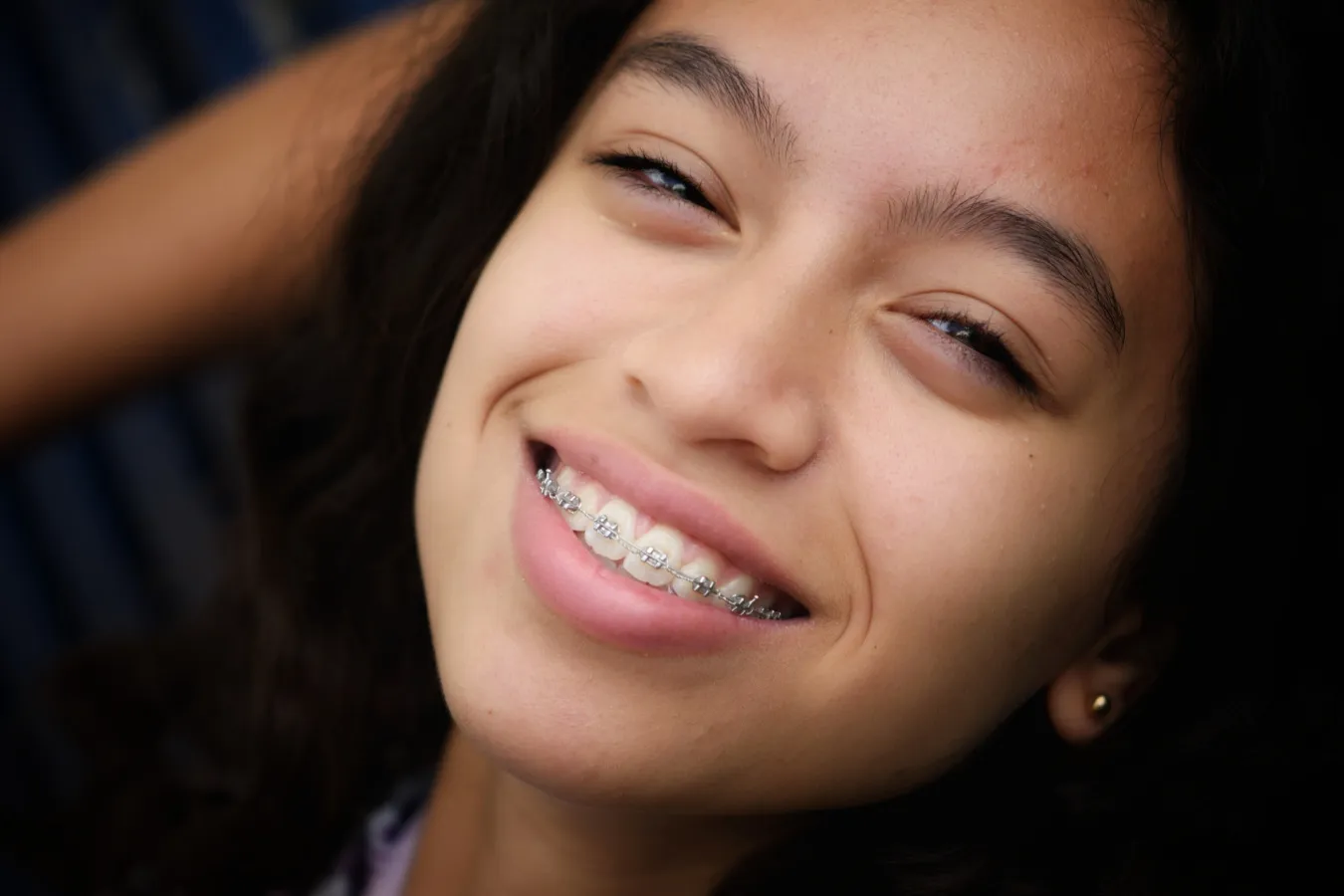
Ask a nine-year-old how they feel about getting braces and you will usually get one of two answers: genuine excitement, or dread borrowed from an older sibling. The difference is rarely the braces. It is how the whole thing was framed before the first appointment.
Kids handle eighteen months of treatment far better when it feels like something they are doing rather than something being done to them. Here is what actually works.
Let them own the color choices
The elastic bands around each bracket get changed at every adjustment visit, and the color is entirely your child’s call. This is the single easiest win available. Suddenly a routine appointment has a decision attached to it that belongs to them.
Kids in Clinton get creative with it — school colors before a game, orange and black in October, red and green in December, their team’s colors during the season. Some cycle through every color in the tray over the course of treatment just to see them all. Let it be their thing and do not editorialize.
Build a lunchbox that works
Food is where braces cause the most day-to-day friction, so solve it in advance rather than reacting each morning. The rules are simple: nothing hard enough to crack a bracket, nothing sticky enough to pull one off, nothing that requires biting straight through with the front teeth.
What holds up well in a lunchbox:
- Soft sandwiches, wraps, and pasta
- Yogurt, cheese sticks, pudding, applesauce
- Bananas, berries, canned peaches, melon
- Cooked vegetables, mashed potatoes, soft rice dishes
- Apples and carrots — sliced thin, never bitten whole
What causes broken brackets: hard candy, popcorn, nuts, ice, taffy, caramel, gum, and corn on the cob. Corn cut off the cob is fine. That distinction saves a lot of emergency visits every summer.
Make the routine visible instead of nagging
Brushing with braces takes longer and matters more, which turns into a nightly argument in a lot of houses. It goes better when the standard is external rather than parental — a two-minute timer, a chart on the bathroom mirror, a checklist that the child marks themselves. The goal is for the routine to be the authority instead of you.
Track the milestones
Eighteen months is an eternity to a child with no sense of progress. Give them markers:
- A photo on the same spot on the wall at every adjustment visit — the change over six months is genuinely motivating
- A countdown to the next appointment on the family calendar
- Small celebrations for the real milestones: first adjustment done, halfway point, the day the braces come off
Progress photos do more work than any pep talk. Kids who cannot feel change can absolutely see it.
Have a plan for the sore days
The first few days after placement and the day after each adjustment are the tender ones. Plan for them instead of improvising: soft dinners on the calendar, smoothies, cold things, orthodontic wax within reach for a spot that rubs. A child who was warned that day three might feel achy handles it far better than one blindsided by it.
Watch your own language
Children take their emotional cues from you. If you talk about the cost in front of them, or share your own miserable memories of headgear in 1994, they will absorb it. If you talk about braces as a normal part of growing up and something worth doing, they generally treat it that way too.
Braces for kids in Clinton, NC
Dr. Christopher C. Potts treats children at his Clinton office and works with families to keep treatment straightforward and positive. Learn more about braces for kids in Clinton, our approach to young patients, and the signs your child might need braces. You can also find our Clinton office or schedule a consultation.